Putharekulu: What Is It?
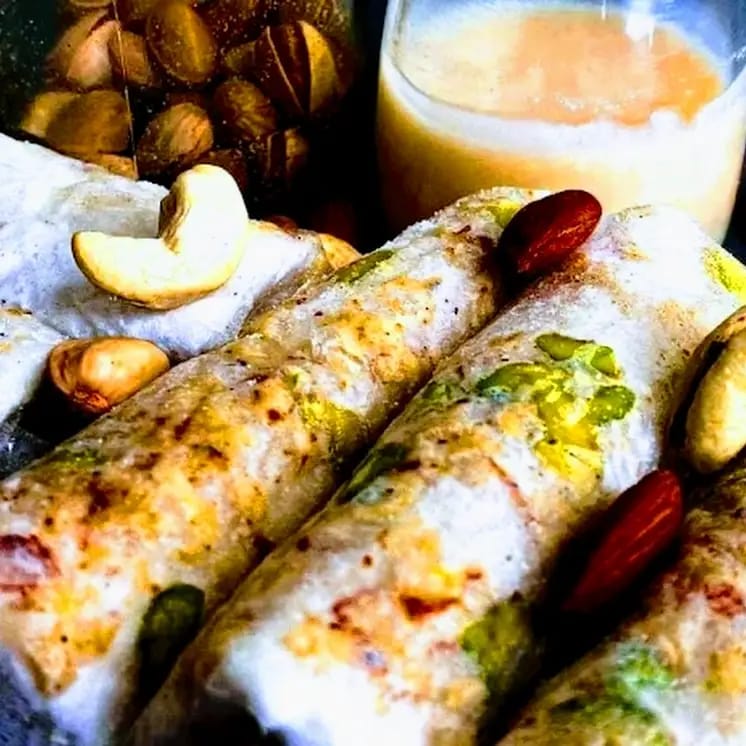
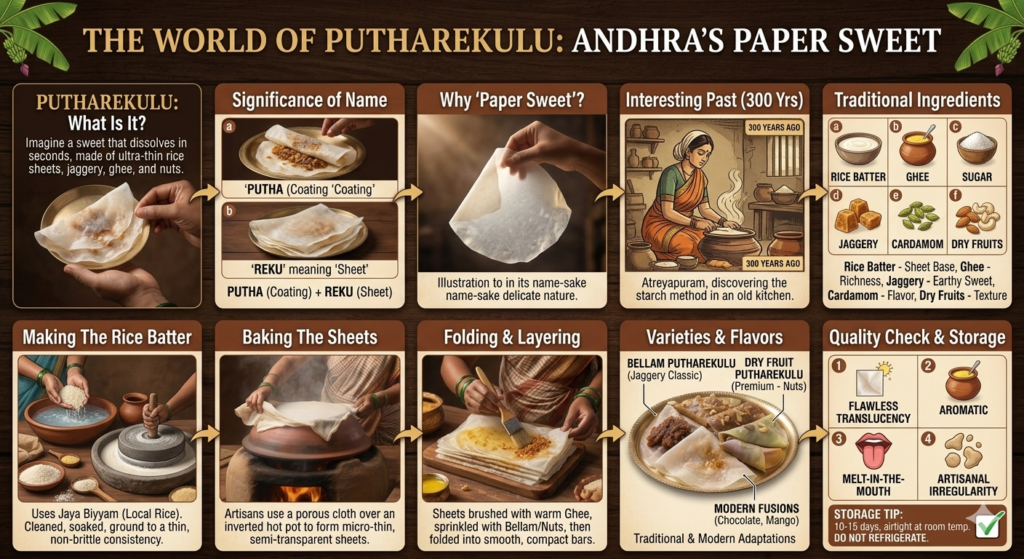
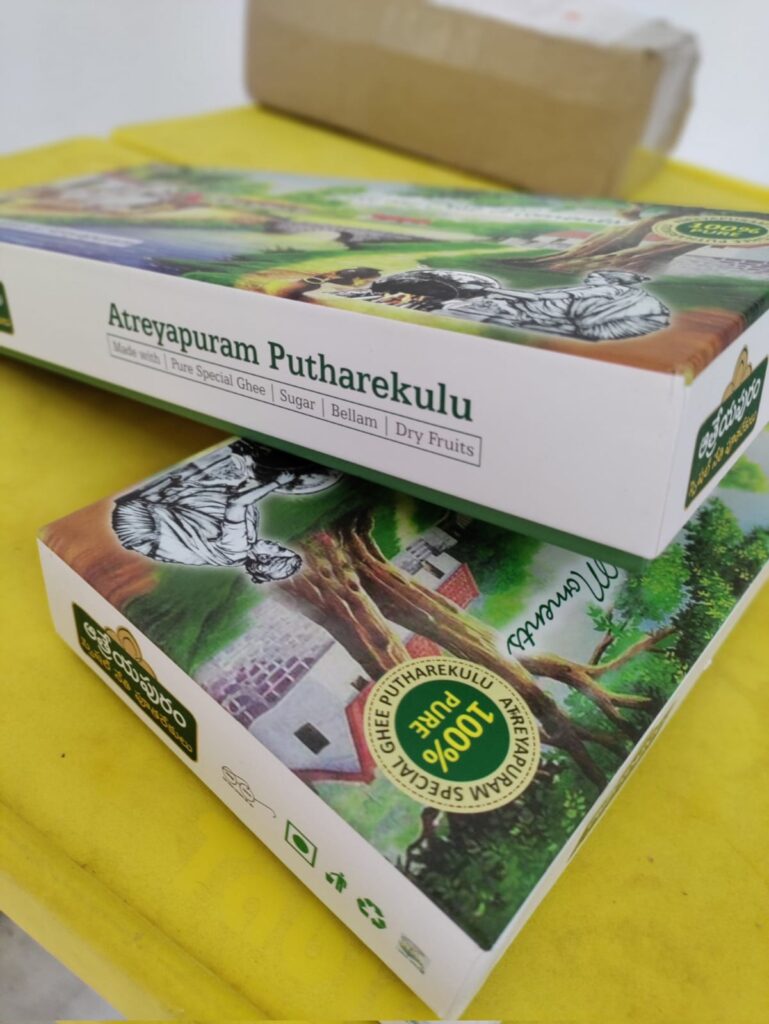
Imagine opening a treat that resembles a thin piece of paper. It disappears in your tongue in a matter of seconds when you bite into it, leaving behind rich flavours of tradition, ghee, and jaggery. That’s the allure of putharekulu, one of the most beloved dishes in Andhra Pradesh. Putharekulu, also known as the “Paper Sweet,” is a traditional delicacy that originated in the Andhra Pradesh hamlet of Atreyapuram and is now well-known throughout India and even abroad. Ultra-thin sheets of rice starch are stacked with sugar, jaggery, ghee, and sometimes dry fruits to create the confection. It differs from regular candies due to its distinct texture and complex preparation method.
The Significance of the Name
In Telugu, “Putha” means coating and “Reku” means sheet. When taken as a whole, the name literally means “coated sheet,” which sums up the construction of the confection. The rice sheet looks like parchment paper because it is so thin and translucent. Because of its unique appearance, it has gained a lot of fame and the loving moniker “paper sweet.” Putharekulu is often given as a gift at weddings, festivals, and other special events and has come to represent Andhra Pradesh’s rich culinary legacy.
The Reason It’s Called Paper Sweet
Putharekulu is made from edible rice paper, in contrast to traditional candies that are moulded or fried. When the rice starch is applied to a heated pot that has been specifically prepared, it forms a paper-like coating practically immediately. The finished sheets are extremely delicate, requiring years of practice and extraordinary skill to handle. Because of this skill, Putharekulu is more than just a dessert—it’s a generation-old culinary talent.
Putharekulu’s Interesting Past
Deeply ingrained in the cultural fabric of coastal Andhra Pradesh, the narrative of Putharekulu dates back almost 300 years. Local legend states that a peasant woman in Atreyapuram made the accidental discovery of the treat while experimenting with leftover rice starch. What started off as a straightforward domestic invention eventually evolved into one of India’s most renowned traditional candies.
Putharekulu’s Traditional Ingredients
Putharekulu’s ingredient list is remarkably straightforward, which contributes to its legendary fame. Craftsmanship, not complication, is what makes it magical.
The purpose of the ingredient
The delicate sheets are formed from rice batter.
Ghee adds fragrance and richness.
Conventional sweetener: powdered sugar
Jaggery is a healthier substitute for sugar.
Cardamom Improves Taste
Dry fruits provide nourishment and texture.
The Production of Atreyapuram Putharekulu
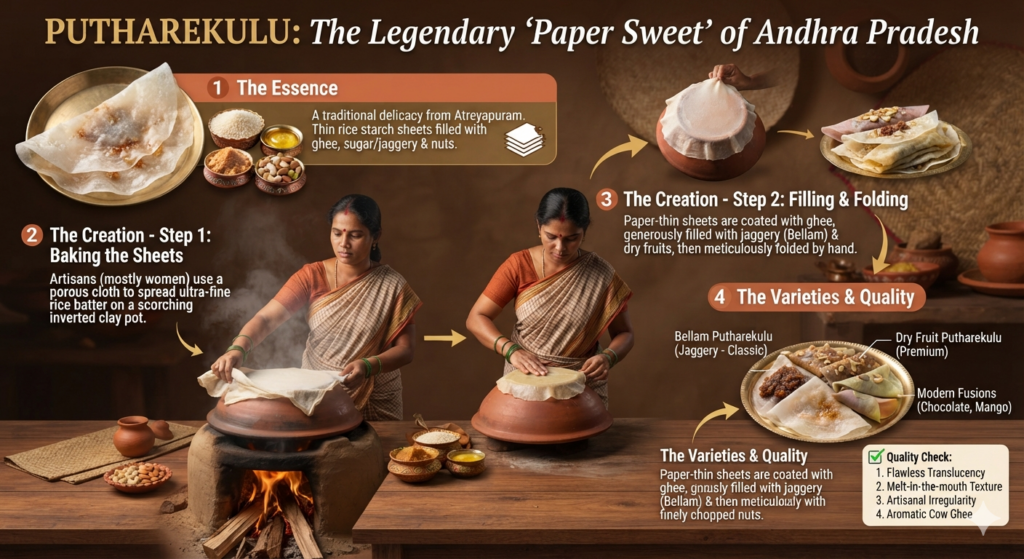
Step by Step Modern machineries are unable to reproduce the art of creating real Ptharekulu. It depends solely on the accuracy, perseverance, and hereditary abilities of regional craftspeople, mostly women, who have maintained this traditional craft for many generations.
Making the rice batter for Jaya Biyyam
The first step in the process is to choose a particular local rice variety known as Jaya Biyyam. The grains are properly cleaned, steeped for a few hours, and then mashed into a very fine, silky liquid batter. The key to creating flawless, non-brittle sheets is to get a highly diluted, ultra-watery consistency.
Baking the Sheets of Paper-Thin Starch
The process of making the sheets is a meticulously planned culinary show:
A continuous open flame is set over an inverted earthen pot (clay pot) or specialised metal dome.
A clean, porous cotton cloth is dipped straight into the liquid rice batter by the craftsman.They move the damp cloth quickly and smoothly across the scorching, upside-down surface.The batter is baked into a micro-thin, semi-transparent film as the extreme heat instantly evaporates the moisture.Then, without a single tear, the delicate, translucent edible paper is carefully peeled away by hand.
Folding, Filling, and Layering
The assembling process starts as soon as a stack of immaculate sheets is prepared. Warm, pure cow ghee is lightly brushed over several layers of rice sheets. The craftsman then skilfully rolls and folds them into smooth, compact, rectangular bars after liberally sprinkling a variety of delectable fillings on the surface.
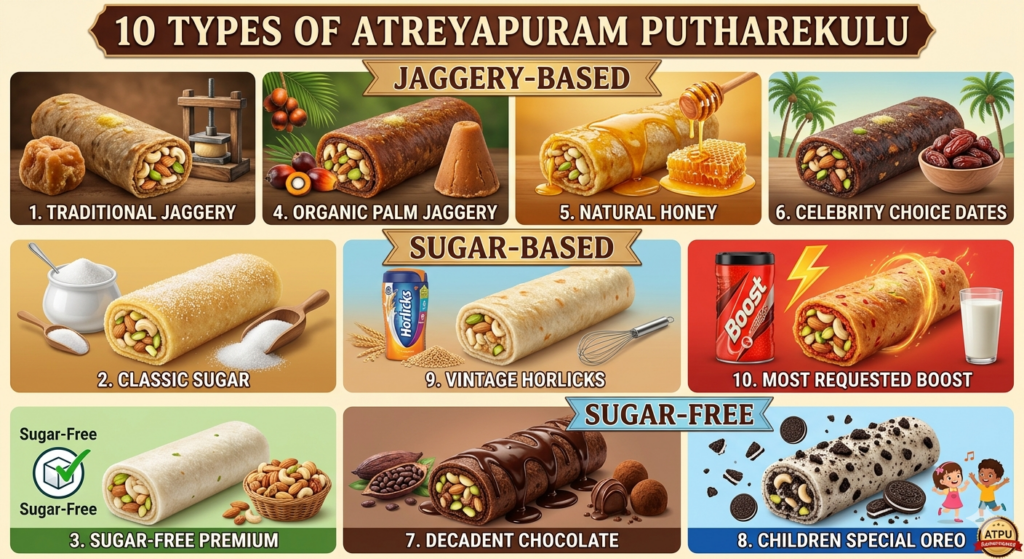
To cater to evolving global palates and health-conscious food lovers, local sweet makers offer a diverse menu of traditional and modern fusion variations:
- Bellam Putharekulu (Jaggery Flavor): The undisputed classic favored by traditionalists. Made with unrefined organic jaggery, it delivers a rich, earthy, caramel-like sweetness.
- Dry Fruit Putharekulu: A premium luxury variant packed with finely minced cashews, almonds, pistachios, and a touch of fragrant cardamom powder. It is widely used as an elegant gift for corporate events and South Indian weddings.
- Modern Fusion Flavours: For younger generations, innovative adaptations include Chocolate Putharekulu, Saffron (Kesar) Putharekulu, Mango, and Coconut options.
Nutritional Values and Health Benefits
When consumed mindfully as a festive indulgence, Putharekulu—especially the jaggery and nut-filled variants—offers several distinct nutritional advantages over standard refined sweets:
| Nutrient Profile | Primary Ingredient Source | Main Health & Dietary Benefit |
|---|---|---|
| Carbohydrates | Hand-ground rice starch sheets | Provides a clean, rapid energy boost |
| Healthy Fats | Pure Desi Ghee (Clarified Butter) | Delivers fat-soluble vitamins and aids smooth digestion |
| Essential Minerals | Organic Bellam (Jaggery) | A rich source of natural iron and antioxidants |
| Proteins & Micronutrients | Almonds, cashews, and pistachios | Adds healthy plant fats, proteins, and premium texture |
- Dietary Tip: Individuals managing diabetes, high blood sugar, or calorie-restricted diets should opt for the Bellam (jaggery) or sugar-free alternatives rather than the refined white sugar version, keeping portion control in mind.
How to Identify 100% Original Atreyapuram Putharekulu
Due to its massive popularity, low-quality commercial imitations are common. Use these strict quality checks to ensure you are enjoying a genuinely handcrafted item:
- Flawless Translucency: The individual rice starch layers must be paper-thin, semi-transparent, and light-weight.
- Aromatic Presence: The distinct, intoxicating aroma of pure deseeded cow ghee should be recognizable the moment you open the box.
- Melt-in-the-Mouth Texture: A real piece will never feel overly chewy or tough; it should stay crisp to the touch and dissolve effortlessly on your tongue.
- Artisanal Irregularity: Because it is entirely handmade by local women artisans, the shapes will feature slight, natural variations rather than rigid, machine-cut uniformity.
Frequently Asked Questions (FAQs)
What is the shelf life of fresh Putharekulu?
When kept inside a completely airtight container at room temperature, fresh Putharekulu remains perfectly crisp and delicious for 10 to 15 days. Avoid refrigerating the sweet, as any trapped moisture will quickly make the delicate layers soggy.
Why is it specifically called the “paper sweet”?
It earned this globally recognized nickname because the cooked rice wrappers are rolled so thin that they closely resemble fine sheets of translucent tissue paper.
Is jaggery Pootharekulu healthier than the sugar version?
Yes. Bellam (jaggery) Pootharekulu is universally considered the healthier option because unrefined jaggery retains natural iron, essential minerals, and antioxidants, whereas refined white sugar provides only empty calories.